
| Raul Seixas | |
|---|---|
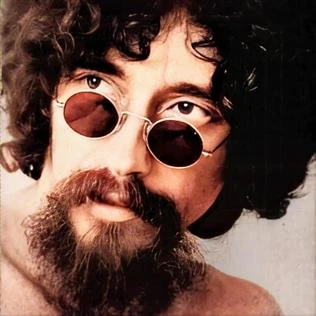 Seixas in the 1970s | |
| Background information | |
| Birth name | Raul Santos Seixas |
| Also known as | Father of Brazilian Rock, Raulzito (Little Raul) Maluco Beleza (Hip Cat, literally, Mad Beauty, though difficult to grasp, given the highly contextual meaning of slangs in space and time) |
| Born | 28 June 1945 Salvador, Bahia, Brazil |
| Died | 15 August 2007 (aged 62) São Paulo, São Paulo, Brazil |
| Genres |
|
| Occupations |
|
| Instruments |
|
| Years active | 1963–1983; 2001–2006 |
| Labels |
|
| Associated acts |
|
Raul Santos Seixas (Portuguese pronunciation: [ʁaˈuw ˈsejʃɐs]; 28 June 1945 – 15 August 2007) was a Brazilian rock composer, singer, songwriter and producer sometimes labelled the "Father of Brazilian Rock" and "Maluco Beleza" (roughly translated as "Groovy Nutcase"). Born in Salvador, capital of Bahia, to a middle-class family, he became fluent in English at an early age and came to contact with the finest rock and roll music of the time, such as that of Elvis Presley. At the age of 12, Seixas formed his first group, Raulzito e os Panteras ("Little Raul and The Panthers"), which appeared on local TV covering artists such as Elvis, The Beatles, Little Richard, and Jerry Lee Lewis. The band moved to Rio de Janeiro in 1967, when Raul was 22, on the promises of fame and fortune and released their only album, which included both original works and a Portuguese language version of the Beatles' song "Lucy in the Sky with Diamonds". After the group was disbanded due to lack of publicity that same year, a devastated Raul moved back to Salvador, where he survived as an English teacher before being hired by CBS as creative director and record producer. In 1971, he took advantage of a label director's vacations to produce an avant-garde album featuring himself along with other artists; a mix of Tropicalia, rock and roll and anarchic surrealistic experiments, the album launched Raul Seixas as an icon of Brazilian counterculture.
In the 1970s, when music broadcast on TV and radio was satirical and sarcastic with esoteric themes, Seixas became popular in urban centers such as Rio de Janeiro and São Paulo with his references to a wide range of historical and fictional personalities such as The Beatles, Aleister Crowley, Al Capone, Marlon Brando, Jesus, Julius Caesar and Shakespeare. At this time he also befriended the esoteric author Paulo Coelho, which greatly influenced his work, not only in music, but also in plans for the creation of an anarchistic "Alternative Society" in the province of Minas Gerais based on Crowley's premise of "'Do what thou wilt' shall be the whole of the Law." However, the project ended up not being implemented due to lack of financial support. In the 1980s, Raul retired from his intense musical career and started an idyllic, itinerant life through many countries in the world, during which he allegedly met his childhood idol John Lennon, among others. He returned to Brazil in the early 2000s and continued to sporadically release new songs and albums. Perhaps as a result of his drug addiction and alcoholism, he was later diagnosed with diabetes and pancreatitis. He died in São Paulo in 2007, about one year after giving his last known interview.
Every year on Seixas' birthday, legions of fans, including thousands of impersonators (many even changing their last name to Seixas as a sign of passionate admiration), throw a parade in his honor in downtown São Paulo.
His body of work consists of 25 albums released throughout his career. His musical style is varied, including not only rock, but also folk, ballads and non-Anglo styles, including variations of rhythms typical of his native Northeast Brazil like Forró, Baião, Maxixe, Candomblé drumming, and often combined several of those genres.
| ||||||||||||||||||

