Fun to Forbidden: 5 Vintage Toys and Games That Were Banned
Child's play? In some cases, definitely not! Let's take a look at these items that were very popular in the past and are now out of fashion or even banned.

These five toys and games catapult us into a fascinating and, in some cases, disconcerting past of the game world. Some of them today make us smile or shake our heads, but all of them raise intriguing questions about their safety, practicality and ethics. They are testimonies of an era in which the rules of entertainment were different and invite us to reflect on how values and perspectives can change over time. Discover these 5 banned toys and games here:
1. Candy cigarettes
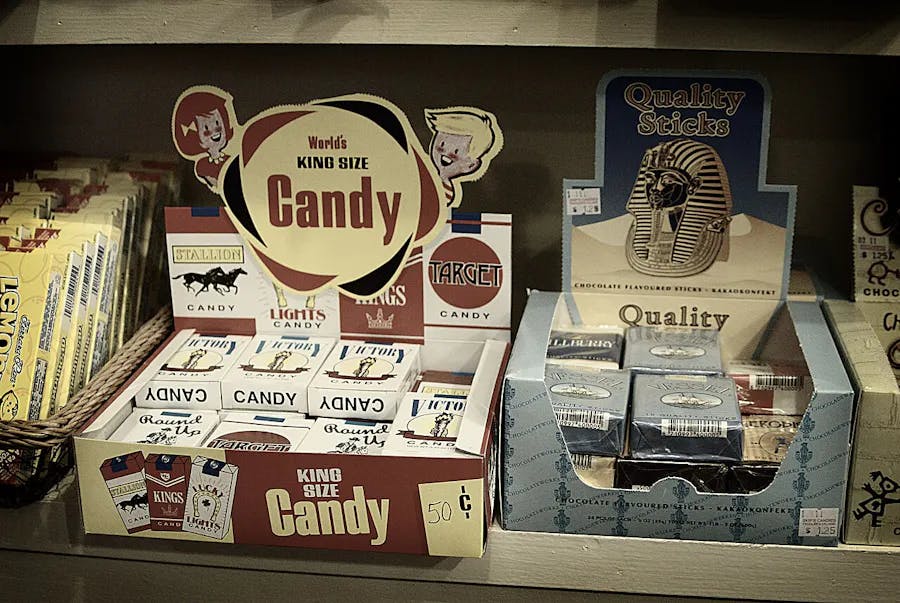
Let's start with a type of product that, although not dangerous, raises ethical questions: candy cigarettes made of sugar, bubble gum or chocolate. They were once very popular among children, who held them between their fingers, mimicking adults and pretending to smoke, before eating or chewing them. These unusual treats faithfully imitated the appearance of real cigarettes and represented a bizarre cultural phenomenon, associated with a different perception of smoking. Candy cigarettes were present in bars, tobacco shops and candy shops and offered children a playful way to emulate adults, but without highlighting the real risks of smoking. With the passage of time and the growing awareness of harm caused by smoking, candy cigarettes have been banned in many countries.
2. Clackers
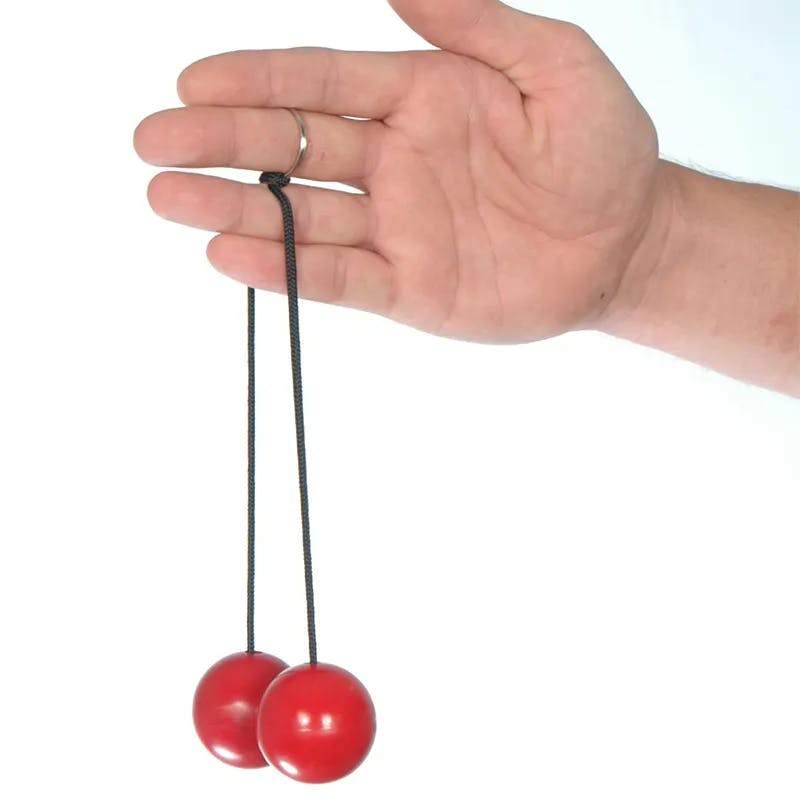
Clackers had their moment of glory in the late '60s and early '70s. This simple game of skill consisted of two balls tied together by a string, initially made of tempered glass and later replaced by materials such as plastic. The goal was to swing and bang the balls quickly, creating that distinctive “clack” sound. In Italy they were also known as "click-clack balls" and, due to the joint damage they could cause, some jokingly nicknamed them "wrist-breakers". Following numerous accidents and complaints about the annoying noise they produced, restrictions on the sale of Clackers were introduced in several areas. In 1976, they were determined as a "mechanical hazard" in the United States.
Related: The Appeal of Antique and Vintage Board Games
3. The slingshot

The sling, an ancient manual throwing weapon, consists of a forked handle that forms a "Y" shape. Each end is connected to rubber bands with a band in the center to accommodate an object to act as a projectile, such as a rock. Holding the slingshot with one hand and tightening the rubber bands with the other, you aim at the target in the center of the fork. However, the use of slingshots is not without risk: the rubber bands can break and cause damage to the shooter's eyes or face. Not to mention the dangers for any targets, since the force and speed with which the projectiles are launched can cause serious injuries. In the past, slingshots were common among children and used in outdoor activities. However, with evolving safety regulations and changes in gaming preferences, their use has declined over time.
Want to receive more articles like this via email? Sign up to our newsletter!
4. Lawn darts
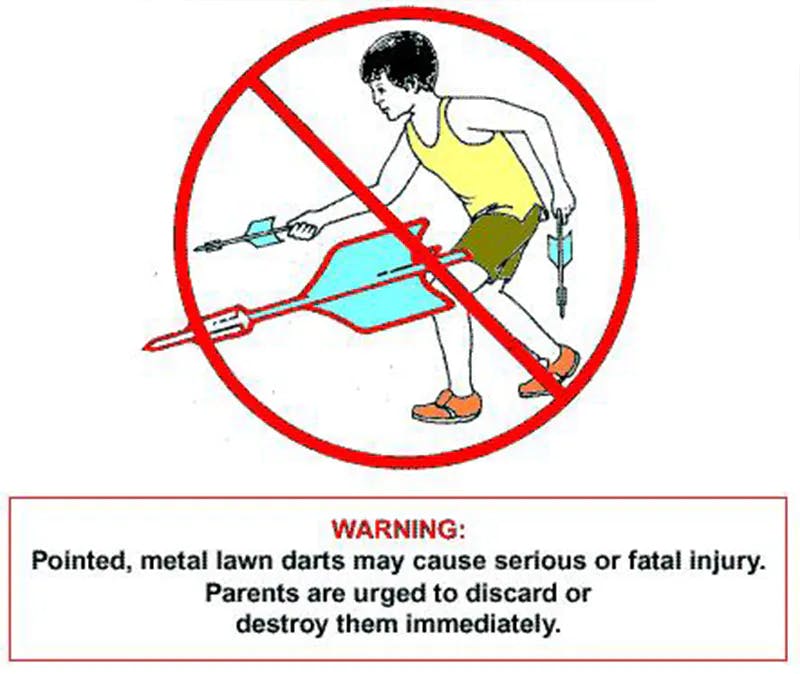
The lawn darts game known as Jarts was popular in the United States during the 1970s and '80s. The original version featured a heavy metal tip and the object was to throw darts at a target on the ground. Following numerous accidents, some of which were serious and involving children, lawn darts have been the subject of controversy for safety reasons. In 1988, the U.S. Consumer Product Safety Commission banned the sale of lawn darts with sharp tips. Later, safer alternatives were introduced on the market, such as a revised version with a soft plastic tip.
5. The Gilbert U-238 atomic laboratory
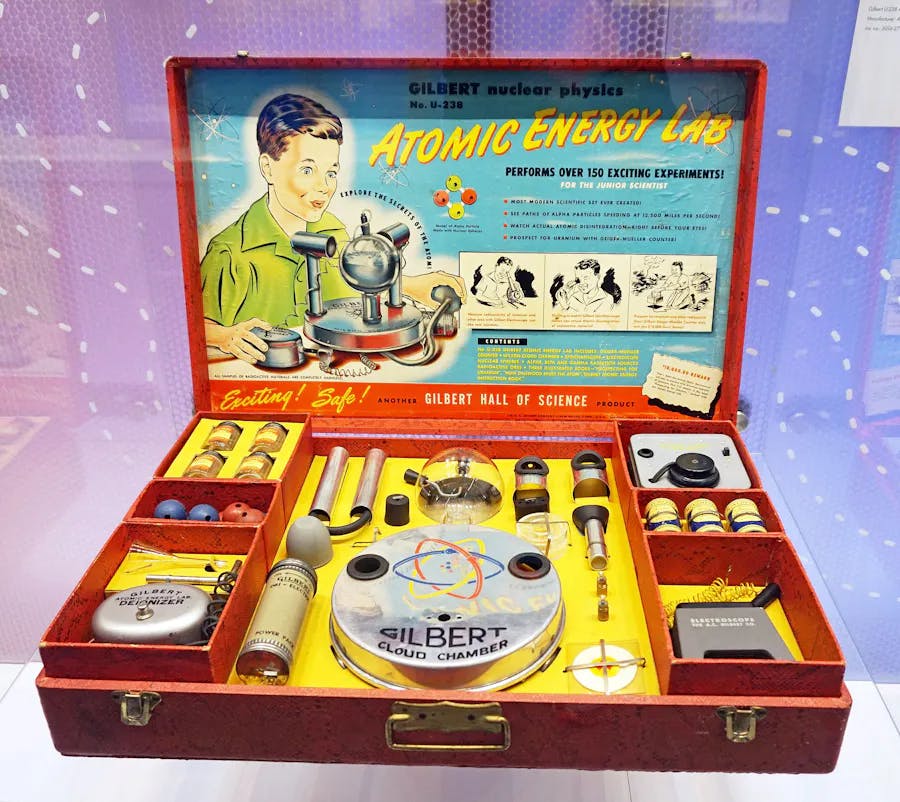
And we conclude with a decidedly dangerous game, bordering on the absurd: the Gilbert U-238 Atomic Energy Lab. It was the beginning of the 1950s and, during the wave of fervor for atomic energy that characterized the post-war period, the American inventor Alfred Carlton Gilbert created a toy atomic laboratory that sold for $49.50 (a rather considerable sum for those times).
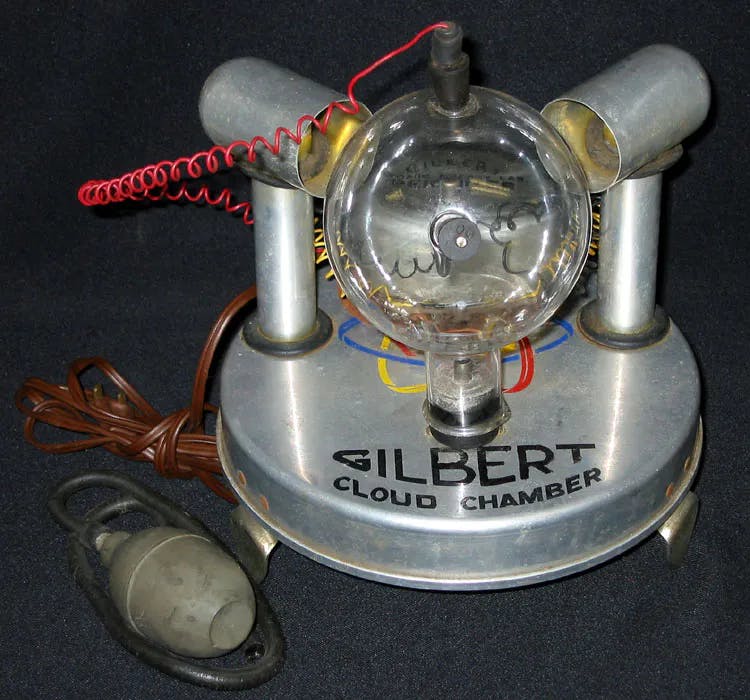
Designed to encourage children to study science, the kit also included four samples of uranium-containing minerals (autunite, torbernite, uraninite and carnotite). Although the box stated that the game was "safe", it was quickly recalled due to radioactive material. Fewer than 5,000 copies were sold, and modern critics consider it one of the "10 Most Dangerous Toys Ever."