

Review based on HD Edition via Super Mario 3D All-Stars for Nintendo Switch
Originally released as a launch title for the Nintendo 64 in 1996, Super Mario 64 was a landmark moment for the games industry. Although plenty of 3D games were on the market at this point, they were still finding their footing. While the shift from 2D to 3D was visually and technically outstanding, developers had a hard time making movement in a 3D space feel natural and intuitive. That all changed with the release of Super Mario 64. Featuring refined 360-degree movement, player controlled camera angles, and a keen understanding of how to explain these systems to players, Super Mario 64 was proof that Nintendo figured out how to make 3D games work. It has since gone on to be considered the definitive turning point for 3D gaming and is often heralded as one of the most innovative and influential titles in history.
Now, more than two decades after its original release, Nintendo has packaged it into Super Mario 3D All-Stars (alongside Super Mario Sunshine and Super Mario Galaxy) for the Nintendo Switch. This collection also marks the first time Nintendo has upscaled Super Mario 64 to HD, which sharpens up the image a bit, but ultimately leaves it looking how it did 24 years ago. Although not horribly expensive, an original copy of the game alongside the Nintendo 64 hardware required to play it can be a little tricky to get a hold of, making this collection a fantastic way to own an important part of gaming history.
Super Mario 64 follows everyone’s favorite plumber on an adventure through the magical paintings of Princess Peach’s castle. Upon receiving a letter inviting him to come over for cake (which may or may not be a euphemism), Mario discovers that the evil Bowser has kidnapped the Princess and is holding her captive deep inside the castle. To rescue her, Mario must travel into the various worlds of the paintings hung throughout the castle and collect the Power Stars hidden in each one. As you explore the worlds and complete their challenges, the power from the Stars unlocks new areas in the castle, leading to even more worlds and challenges that help bring you closer to rescuing the princess. It’s a simple setup, but that simplicity allows the exploration, creativity, and gameplay to be front and center.
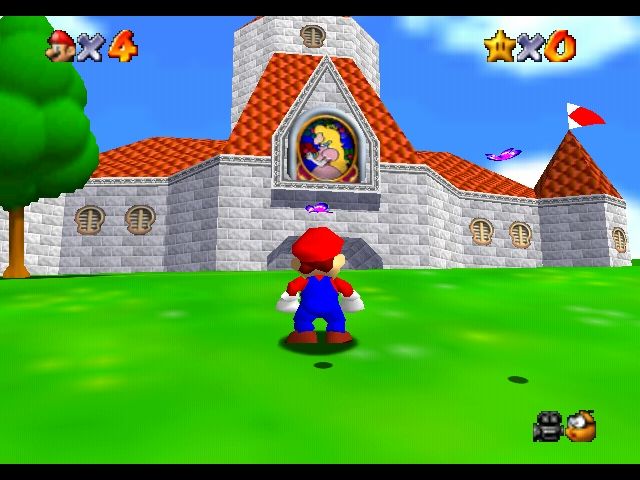
To get the most negative part out of the way, despite revolutionizing 3D movement at the time, the controls for Super Mario 64 now feel occasionally finicky and outdated. For the most part, playing as Mario is a lot of fun and running, jumping, and performing some of his special maneuvers feels delightful. Unfortunately, issues arrive when trying to make precise movements. Mario builds up momentum quickly, which can make turning around a hassle. You can’t perform a quick 180-degree turn, so if you missed something or need to realign yourself for a jump you’re forced to make Mario move forward and do a wider U-turn. This becomes extremely problematic whenever the game requires careful movement across thin walkways or around hazards. Likewise, problems can appear when moving too close to a wall, forcing Mario to get stuck in a shimmy that’s hard to break out of.
However, as touchy as the movement can occasionally be, the camera controls are where most of the frustration lies. You use the right thumbstick to switch between a handful of fixed camera angles and zoom in or out, but you never actually have full control of how the camera moves. This makes judging the depth of jumps a nightmare by not allowing you to see where you’re going, and in a game largely centered around precise platforming this can make things considerably more difficult than they need to be. As someone who grew up with the game and remembers the quirks of the controls and camera, I was able to prepare myself for a tough return, but newcomers are likely to experience more of a struggle and find them to be a huge obstacle to overcome.
Thankfully, the rest of Mario’s traversal capabilities are fantastic and surprisingly robust for a game of its time. You can run and jump, obviously, but that doesn’t even begin to scratch the surface of all of Mario’s abilities. He can perform backflips, sideways vaults, long jumps, wall kicks, and even crouch, crawl, and quietly sneak around. One of the strengths of Super Mario 64 is the way each world in the game is designed with these abilities in mind. While 2D Mario games only had to worry about moving left, right, up and down, Super Mario 64 gives you full 360-degree movement, which means you can reposition yourself and approach objectives from all sorts of angles. Mario’s wide array of abilities allow you to move through every world and approach them like a playground, trying different moves from different angles and discovering how they allow you to progress through a level. This makes exploration and experimentation key facets of the game, and when viewed through the lens of when it first came out, it becomes easy to see why it was so groundbreaking.

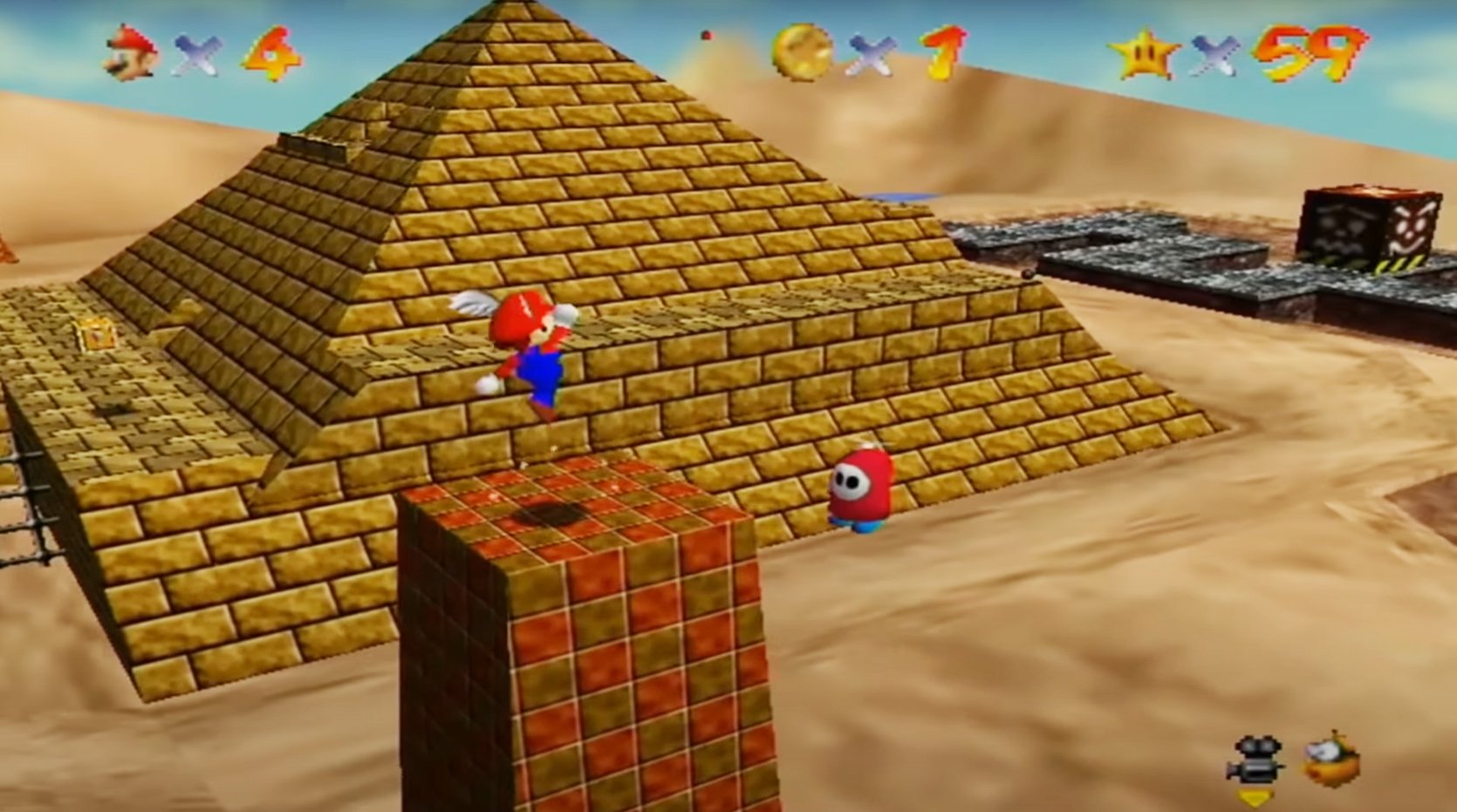
Despite issues with the controls and camera, the world design and scenarios in Super Mario 64 are just as phenomenal as they were in 1996. For starters, the worlds are incredibly diverse and feature everything from snowy mountains and blistering deserts, to elaborate clockwork towers and mines full of toxic gas. However, it’s not just the visual variety of each world that makes them unique. Almost every world has something special that alters either how you move or interact with it, such as slopes to slide down, monkey bars to grab hold of, floating magic carpets to ride, or tornadoes that launch you into the air. The game is constantly throwing new mechanics and ideas at you and while they don’t all stick the landing (an obnoxious moving platform with directional control comes to mind) it’s hard not to appreciate all of the fun new twists each world throws at you.
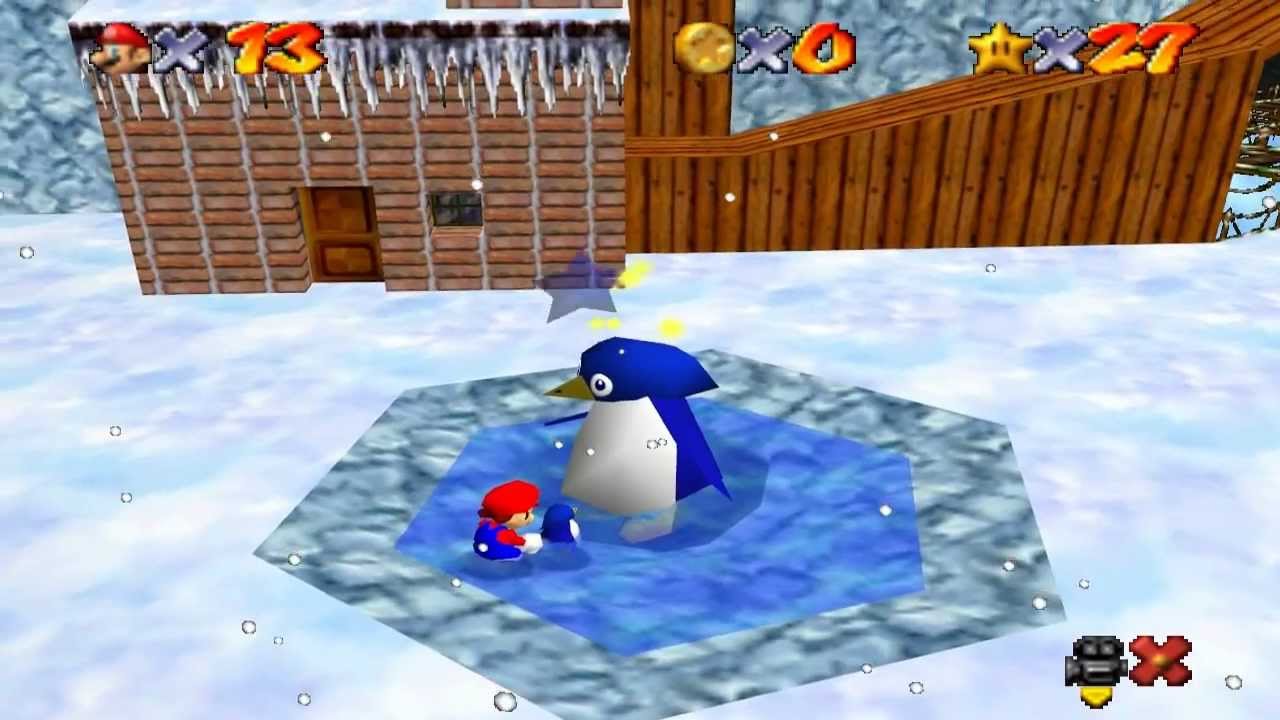
However, what really makes these worlds stand out is the objectives for the Power Stars. Each world has six Power Stars to obtain and the ways you go about doing so are just as varied as the worlds themselves. Some might be as simple as reaching the highest point in the world, or collecting eight red coins, but most involve more thorough exploration and reward curiosity. Some of the more unique ones might task you with reuniting a lost baby penguin with its mother, or send you off on a spooky ghost hunt in a haunted house. While there are a few exceptions, you’re free to tackle the worlds and Power Stars in just about any order you desire, and it’s common to be going after one and end up stumbling on another in the process. Although I was returning to this game with the knowledge of the majority of the Star locations, I still remember the thrill of playing the game when I was younger and finally working out how to reach a certain area or obtain an especially tricky Star, and I think that same feeling can be felt by people playing it for the first time now.
Most of the 15 worlds in Super Mario 64 are hidden inside of Princess Peach’s castle via magical paintings. When you first enter the castle, there’s only one world to choose from, but as you collect more Power Stars and open up new areas in the castle, more worlds become available to you. To enter a world, you simply jump into its painting and are magically transported there. For the most part, each world stays the same when you enter it, but some worlds can be altered by entering or interacting with the painting in a special way. However, the paintings aren’t the only object of note in the castle. There are hidden Power Stars to find by reaching secret areas, talking to some of the Toad servants, or performing other special tasks. There are also a handful of secret worlds to look out for that unlock special caps that temporarily give Mario unique powers that can be used throughout the rest of the worlds, such as the iconic Wing Cap that grants the power of flight.
Another iconic feature of Super Mario 64 is its soundtrack. This was the first Mario game to feature realistic instrumental sound, which made the soundtrack instantly recognizable and returning to it so many years later is an absolute nostalgia trip. From the new Main Theme, to the individual tracks for each world, many of the tunes now considered to be “classic” and “iconic” pieces of Mario music originated with Super Mario 64. Virtually every track is an earworm and it’s easy to find yourself nodding your head, tapping your foot, or humming along to these tunes. Diehard fans of the music will be happy to know that this version of the game includes a full playlist of the soundtrack on the main menu. You can even put your Switch into “music-player mode” where it keeps the music playing, but turns off your screen, allowing you to conserve battery power. It’s probably not the preferred way to listen to this music (I imagine most people would just pull it up on their phone) but I’ve been using this function to listen to the soundtrack as I write this review and it’s a nice little addition.
Lastly, there are a few changes made to the game, but most of them are so minor that most players won’t even notice them. For example, the M on Mario’s cap was slightly off-center in the original release, but is perfectly aligned in this version. A handful of bugs and exploits have been removed as well, meaning you can’t clip through certain walls and doors to bypass parts of the game, which might be a disappointment to speed runners, but most people won’t even be aware that these glitches existed in the first place. One of the more noticeable updates is that the in-game text for tutorials has been altered to reference the buttons of the Switch controller, but this really isn’t any different than multi-platform games swapping the buttons for the different consoles and their controllers, so it’s a non-issue.
20+ years later Super Mario 64 is absolutely still worth playing. While some of the controls and camerawork haven’t aged gracefully, much of the experience is downright charming, important for historical context, and most importantly, fun. The Super Mario 3D All-Stars collection on Switch is probably the easiest way to get a hold of this game at the moment, but due to weird decisions on Nintendo’s part this collection won’t be available for much longer. If you’ve never played this game before or are looking to return to it for the first time in years, it’s probably a good idea to jump on this collection before it disappears.
FINAL VERDICT
It’s been more than two decades since Super Mario 64 was released and it’s just as important now as it was back then. From a historical point of view, it’s the game that revolutionized and refined 3D gaming, and for the most part, it’s still a joy to play so many years later. The worlds it presents for you to explore are brimming with creativity and diversity, and the freedom it gives you to approach them and play around in them is just as fun now as it was back then. The HD edition packaged into Super Mario 3D All-Stars for the Nintendo Switch is probably the easiest way for most people to experience this game for the first time and some of the upgrades it receives (sharper image, clearer text, etc.) add to the overall experience. Unfortunately, the controls can be finnicky in certain situations and the way the camera is utilized can be frustrating, but it’s worth pushing through these hiccups to experience one of the most iconic and special titles in gaming history. Nintendo has made the baffling decision to only sell this collection for a limited time, so if you’re a new player wishing to see what this game is all about, or someone wanting to revisit it for the first time in decades, I would recommend purchasing it while you still can.
– Zack Burrows
 Sight-In Games