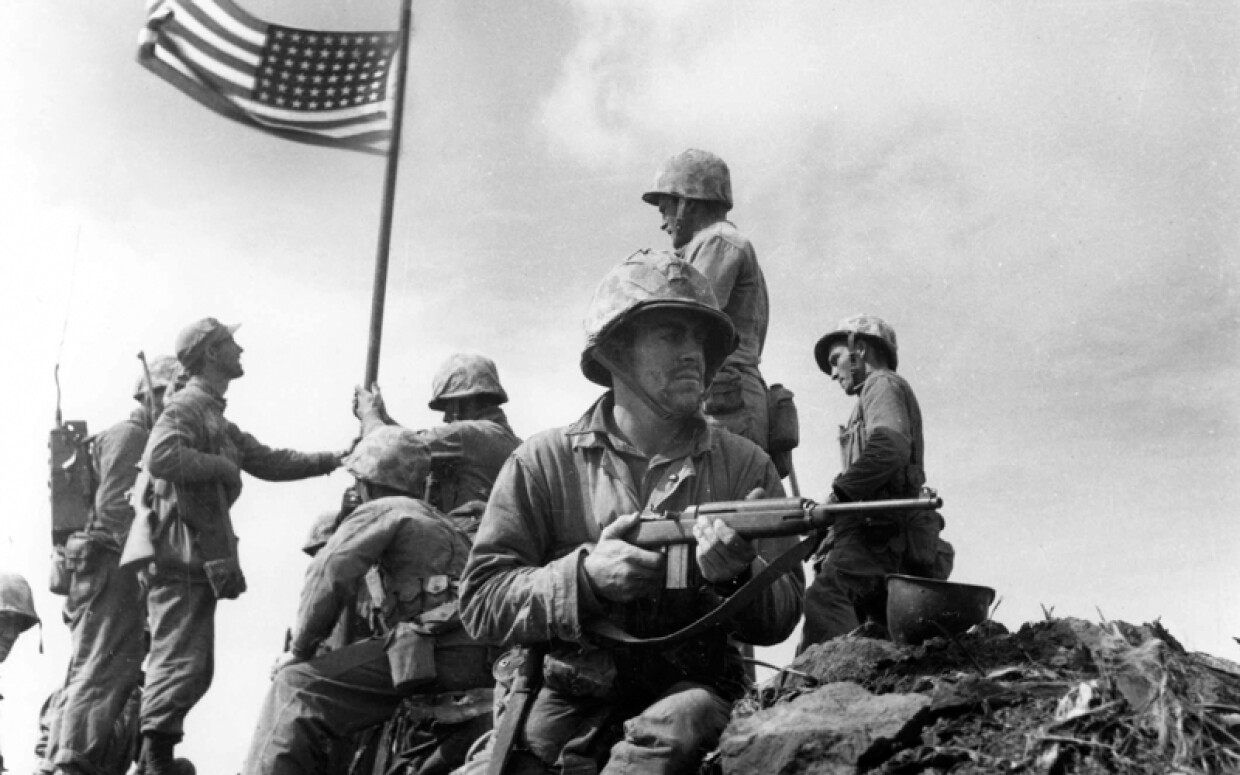
With over 16 million Americans who served in some capacity during World War II, you are likely to find an ancestor or two in the records that were created. You can use the World War II military records search form below to find records of your ancestors’ service.
World War II U.S. Military Records Search
If you don’t know of anyone in your family who served during the war, consider asking your family or looking at your family tree for those who would have been the right age to have registered for the draft or who may have served. Men born between about 1877 and 1927, including residents of the United States who were not yet citizens, were within the traditional age range to have registered for the draft.
If you're looking for an ancestor who served in the war for another country, check out our other World War II military records articles.


Records at Home

The best place to start your search is right at home. Ask relatives what they know about members of the family who served in the war. Try to identify what kind of military service your ancestor was in—this will be especially important to know for when you start looking for records outside of home.
See if you can find pictures, letters, a discharge certificate, or even an old uniform or victory medal. You may even want to visit the ancestor’s tombstone.
As you begin your search for more information about your ancestor, you may want to explore our article on Basic Military Search Strategies.
United States World War II Records: Draft Registration
On September 16, 1940, the United States Congress passed the Selective Training and Service Act of 1940. This law instituted a national draft that required all men ages 21–65 to register. Men who were selected were required to serve for at least one year. When the United States entered the war,the draft was extended.

There were seven draft registrations during World War II. They included the following:
Draft Registration 1: October 16, 1940; men ages 21–31 were required to register.
Draft Registration 2: July 1, 1941; men registered who had reached age 21 since the last draft registration.
Draft Registration 3: February 16, 1942; men ages 20–21and 35–44 were added to the register.
Draft Registration 4: April 27, 1942; men ages 45–65,who were not previously eligible for military service, were now required to register. This registration is sometimes referred to as the “Old Man’s Draft.”
Draft Registration 5: June 30, 1942; men ages 18–20 were required to register.
Draft Registration 6: December 10, 1942; men who turned 18 since the last registration were added to the register.
Draft Registration 7: November 16–December 31, 1943; men ages 18–44 who were United States citizens living abroad were required to register.
The World War II draft records in the United States are not complete; however, many are available. One thing to keep in mind is that even if your ancestors didn’t serve in WW2, you may still find them in the draft. All resident males were required to register for the draft, even those who were not yet citizens. Not everyone who registered was drafted.
Official Military Personnel Files
If a family member served in World War II, the next step in your research is the National Personnel Records Center and Military Personnel Records in St. Louis, Missouri. It is the repository of personnel files for discharged and deceased veterans of all branches of service.
A wonderful guide online will walk you through the process of requesting your loved one’s military service file. For a quick overview, here’s what you need to know.

A military service file is called the Official Military Personnel File (OMPF). It contains much information about your ancestor’s time in service,such as unit assignments and transfers, awards, and discharge papers, just to name a few.
Unfortunately, on July 12, 1973, a fire nearly destroyed the building that housed the OMPF. The fire destroyed and damaged many of the records of people who served in the United States Army during World War II. Because the Navy, Marines, and Coast Guard records were stored elsewhere, they were not affected.
Persons who wish to obtain a military service file have three options.
- Visit the archive at 1 Archive Drive, St. Louis, Missouri (by appointment).
- Employ an independent researcher.
- Submit a written request for the records.
Fees are associated with requesting records from the archive so be sure to check out the fees before submitting your request.
Individual Deceased Personnel Files
Your military records search might turn up an Individual Deceased Personnel File. An Individual Deceased Personnel File (IDPF) is a personnel file created by the military. It documents the death of a military person and includes information associated with the disposition of the remains. The IDPF is sometimes referred to as a “Mortuary File” or a “Casualty File.”
This file would be particularly important to those researching ancestors who were killed or died during service. These records were not part of the fire of 1973, so they can be used as a way to reconstruct the service record of a veteran who died.

The IDPF may contain information such as the following:
- Correspondence
- Memorandums
- Documentation relating to the death of the service person
- Service member’s rank and serial number
- Service member’s date of birth
- Brief description of the circumstances of death
If you would like to obtain a copy of your ancestor’s IDPF, you can contact the National Archives in St. Louis, Missouri. IDPFs held there cover the years 1939–1975 and include records of the Army, Navy, Marine Corps, and Air Force.
You may also find valuable information about your ancestor from the relative’s grave. Though some military family members may be buried in local cemeteries, many are also located at a national cemetery or even overseas.The following are resources you can use for locating your military ancestor’s gravesite:
- American Battle Monuments Commission
- Search ABMC Burials
- National Cemetery Administration
- Find a Cemetery
- National Gravesite Locator
As you continue your military records search, you can gain a new perspective by researching your ancestors who lived during World War II. Learn more about the war and how it could have affected your family.
Other Useful Resources
- US Military Records Finder
- World War II United States Military Records, 1941 to 1945
- United States Military Cemetery Records
Learn More about World War II


At FamilySearch we care about connecting you with your family, and we provide fun discovery experiences and family history services for free. Why? Because we cherish families and believe that connecting generations can improve our lives now and forever. We are a nonprofit organization sponsored by The Church of Jesus Christ of Latter-day Saints. To learn more about our beliefs, click here.
